

Abdominoplasty
Abdominal contouring procedure, removing excess skin and, where relevant, repairing the abdominal muscles.
What the Procedure Is
Abdominoplasty is the surgical procedure intended to reshape the abdominal wall by removing excess skin and fat and, when necessary, by repairing the abdominal muscles (correcting diastasis or hernias). The procedure is indicated for patients with significant skin laxity after pregnancy, after major weight loss, or as a result of the natural ageing process.
When the excess consists exclusively of fatty tissue, without surplus skin or muscle laxity, liposuction may be sufficient. If, on the other hand, there is excess skin and changes in the abdominal wall, abdominoplasty offers the most effective solution.
Who It May Suit
The procedure is recommended for people who present:
- excess skin and fat in the abdominal area;
- sagging skin and stretch marks, particularly below the navel;
- diastasis of the rectus abdominis muscles;
- changes that appeared after pregnancy;
- excess skin after major weight loss, including after bariatric surgery.
For an optimal result, it is recommended that weight be stable before the procedure.
What It Can and Cannot Address
Abdominoplasty can reduce excess skin and bring together separated abdominal muscles. It is not a weight-loss method and does not replace liposuction when the main issue is excess fat without excess skin.
How the Consultation Works
To reduce the risk of complications it is recommended to:
- stop smoking completely at least 4 weeks before and after the procedure;
- avoid medication containing aspirin or other anti-inflammatory drugs, as directed by the doctor;
- carry out the blood tests and the pre-anaesthetic consultation;
- maintain a stable weight.
How the Procedure Is Performed
The operative technique is adapted to each patient, according to their anatomy and aesthetic goals.
During the procedure the following may be combined:
- removal of excess skin;
- liposuction of the adjacent areas for a harmonious contour;
- repair of the abdominal muscles, when there is diastasis or other changes in the abdominal wall;
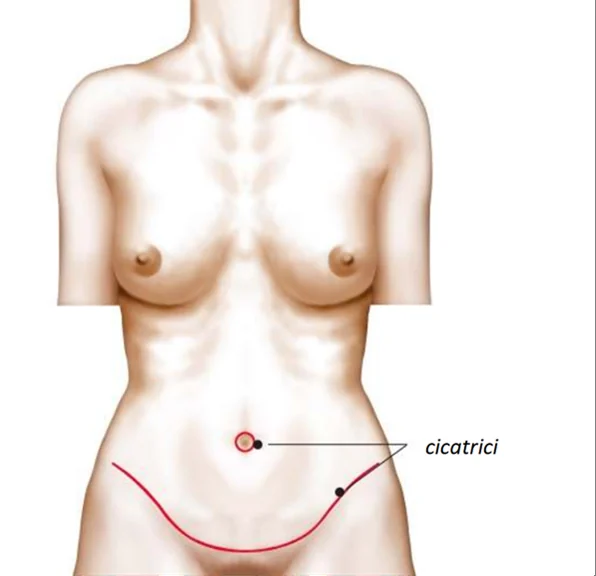
- repositioning of the navel, in the case of a full abdominoplasty.
In situations where the excess skin is limited, a mini-abdominoplasty may be indicated, which involves a shorter scar and does not usually require repositioning of the navel.
Anaesthesia
The procedure is performed under general anaesthesia and usually requires a hospital stay of 1-2 nights, depending on the extent of the procedure and on post-operative progress.
Recovery
The recovery period differs from one patient to another, but generally involves:
- wearing a compression garment for 4-6 weeks;
- early mobilisation from the first post-operative day;
- resuming light daily activities after approximately 2 weeks;
- avoiding intense physical effort for 6-8 weeks.
Swelling and a feeling of abdominal tightness are normal in the first weeks and subside progressively.
Risks and Limits
Like any surgical procedure, abdominoplasty involves certain risks, even if these are rare when the procedure is performed by an experienced plastic surgeon.
Complications may include:
- haematoma;
- seroma;
- infection;
- healing disorders;
- delayed healing, particularly in smokers;
- venous thrombosis or pulmonary embolism (rare, but significant).
During the pre-operative consultation, every patient receives complete information about the benefits, the limits and the risks of the procedure, so that the treatment decision is made in full knowledge of the facts.
When Results Are Visible
The results
The result is visible immediately after the procedure, but the final shape of the abdomen and the appearance of the scars are assessed after approximately 6-12 months.
Abdominoplasty provides a firmer, flatter abdomen and a better defined waist, and improves body proportions. For many patients the benefits are not only aesthetic but also functional, through improved comfort and greater confidence in their own image.
The scars
Every abdominoplasty involves a scar. It is positioned as low as possible so that it can be covered by underwear or a swimsuit. In the case of a full abdominoplasty there is also a discreet scar around the navel.
The appearance of the scars improves progressively over the first year after the procedure.