

Aesthetic Rhinoplasty
Surgical reshaping of the nose, for balance between facial features or to correct functional issues.
What the Procedure Is
Rhinoplasty is the surgical procedure that changes the shape of the nose in order to improve its aesthetic appearance and, in certain situations, to correct problems with nasal breathing.
The aim of the operation is to reshape the nose so that it is in harmony with the rest of the face, preserving a natural appearance suited to the features and the personality of the patient.
Rhinoplasty can correct:
- a nose that is too large or too wide;
- a nasal hump;
- a deviated nose;
- a nasal tip that is too bulky, drooping or insufficiently defined;
- nostrils that are too wide;
- changes that appeared after trauma;
- changes that appeared with advancing age;
- certain problems with nasal breathing.
The procedure may be carried out in women as well as in men, once nasal growth is complete, usually from around the age of 16.
Who It May Suit
It may suit people who are unhappy with the shape, size or symmetry of their nose, as well as those with breathing difficulties caused by structural issues. The exact fit is established during the consultation.
What It Can and Cannot Address
The aim of rhinoplasty is to obtain a nose that is:
- natural;
- proportionate to the rest of the face;
- harmonious with the features of the patient;
- adapted to their realistic wishes.
The objective is not to obtain a "perfect" nose, but to improve the overall appearance of the face and to create an aesthetic balance.
In certain cases, rhinoplasty may be combined with:
- correction of a deviated septum;
- reduction of the nasal turbinates to improve breathing;
- genioplasty (modification of the chin) to harmonise the facial profile;
- other facial aesthetic procedures.
In selected situations, certain minor changes can be corrected through non-surgical methods, such as hyaluronic acid injections. The doctor will indicate whether this option is suitable.
How the Consultation Works
Before the operation
Before the procedure a complete consultation is carried out, which includes:
- analysis of the reasons why the patient wishes to have the operation;
- assessment of the shape of the nose and of its relationship with the rest of the face;
- examination of the inside of the nose;
- establishing realistic objectives;
- choosing the appropriate surgical technique.
In certain cases, the desired result may be simulated using digitally modified photographs. This simulation is intended as a guide and does not represent a guarantee of the final result.
The surgeon may sometimes recommend postponing or giving up the procedure if the expectations of the patient are not realistic.
The following will be carried out:
- medical tests, depending on the case;
- a pre-anaesthetic consultation.
Medication containing aspirin must not be taken for at least 10 days before the operation, unless the doctor indicates otherwise.
Smoking and the operation
Smoking has a negative effect on healing and increases the risk of complications.
It may encourage:
- delayed healing;
- infections;
- skin problems;
- complications related to anaesthesia.
Complete cessation of smoking is recommended at least one month before the operation, maintaining abstinence until healing is complete.
The same recommendations apply to electronic cigarettes.
How the Procedure Is Performed
Principles of the procedure
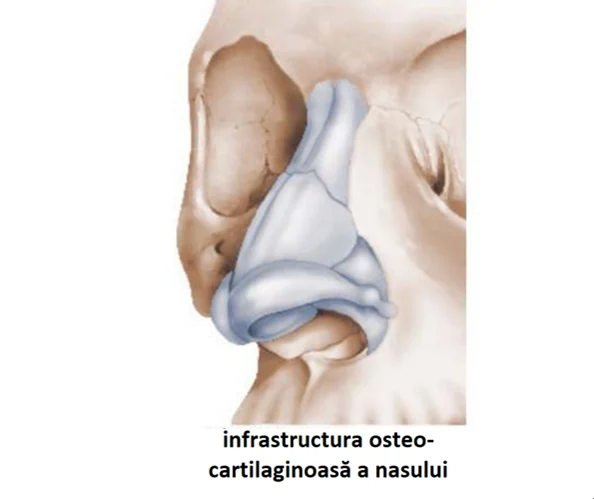
The nose is made up of bones and cartilage which give it its shape. During rhinoplasty, the surgeon reshapes these structures to obtain the desired shape.
The skin of the nose then adapts to the new structure. For this reason, the quality of the skin plays an important role in the final result.
In most cases:
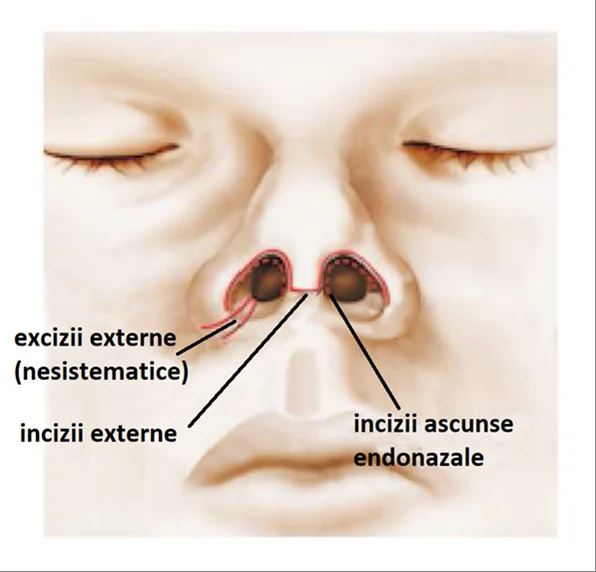
- the scars are not visible;
- the incisions are hidden inside the nostrils.
Sometimes a small external incision may be necessary, located at the level of the columella (the area between the nostrils) or at the base of the nostrils, when an open technique or a reduction in the size of the nostrils is required.
How the procedure is carried out
The operation generally lasts between 45 minutes and 2 hours, depending on the complexity of the case.
The procedure involves:
Incisions
The incisions are usually hidden inside the nose.
Reshaping the nose
The surgeon may:
- remove the nasal hump;
- narrow the nose;
- correct deviations;
- reshape the nasal tip;
- reduce the length of the nose;
- correct the nasal septum;
- use cartilage or bone grafts when necessary.
Closing the incisions
The sutures are fine and, in many cases, absorbable.
At the end the following may be applied:
- nasal packing;
- dressings;
- an external splint for protection and moulding.
Anaesthesia
Type of anaesthesia
Rhinoplasty is most frequently performed under general anaesthesia.
In certain cases it may be carried out under local anaesthesia combined with intravenous sedation.
The choice of the type of anaesthesia is decided together with the surgeon and the anaesthetist.
Hospital stay
The procedure may be carried out:
- as day surgery, with discharge on the same day after observation; or
- with a short hospital stay of 1-3 days, depending on the situation.
Recovery
Pain is usually mild and can be controlled with ordinary medication.
In the first days the following may appear:
- a blocked nose and difficulty breathing through the nose;
- swelling (oedema);
- bruising around the eyes;
- a feeling of nasal tightness.
The following are recommended:
- rest;
- avoiding effort;
- avoiding blows to the nose.
The nasal packing is usually removed between the first and the fifth day.
The nasal splint is removed approximately between the 5th and the 8th day.
Social appearance normalises progressively:
- after approximately 10-20 days, most patients can return to their usual activities;
- swelling may persist for longer.
The following are recommended:
- sun protection in the first weeks;
- avoiding contact sports and intense effort for approximately 3 months.
Risks and Limits
Limits and possible imperfections of the result
The result may be influenced by:
- the way the skin adapts;
- the individual healing process;
- unpredictable tissue reactions.
The following may appear:
- small asymmetries;
- minor irregularities;
- slight changes in breathing;
- the need for touch-ups.
If a secondary correction is needed, it is usually recommended after the tissues have fully matured, a few months after the first operation.
Possible complications
Like any surgical procedure, rhinoplasty carries certain risks.
Complications related to anaesthesia
The anaesthetist will explain the specific risks before the operation.
Bleeding
It may occur in the first hours after the operation and, rarely, may require additional treatment.
Haematoma
It may require evacuation if it is significant or painful.
Infection
It is rare, but may require antibiotic treatment.
Visible scars
These are rare and appear particularly when external incisions are necessary.
Skin problems
Skin lesions may rarely appear, encouraged particularly by smoking or by the pressure exerted by the splint.
Changes in sensitivity
These may appear temporarily and usually subside progressively.
When Results Are Visible
The result begins to be appreciable after a few months.
In general:
- after 2-3 months the main progress can be observed;
- the final result is assessed after approximately 6-12 months.
The changes obtained through rhinoplasty are permanent, but the nose continues to age naturally along with the rest of the face.
A successful rhinoplasty can bring:
- improved facial harmony;
- increased personal satisfaction;
- an important psychological benefit.
Conclusions
Rhinoplasty is a complex procedure which requires careful assessment and good collaboration between the patient and the surgeon.
When it is carried out by a qualified surgeon, with realistic expectations on the part of the patient, the results are in most cases very satisfactory.
The aim of the operation is to improve the appearance and/or the function of the nose, not to attain perfection.